Hudson Jeans are on sale at ideeli.com at up to 55% off. Skinnies, bootcut and wideleg styles are available with prices starting at $79. Click here to begin shopping.
Recent Posts
- Whitney Port hosts DL1961 launch at Nordstrom
- Celebs Love Anlo Jeans
- Denim on the Runway: Paris Fashion Week: J Brand and Hussein Chalayan
- Who Was Grayson Ozias IV and Where is His Fortune?
- Celebs Love DL1961
- Five Questions for Five Pockets: Marck Marcellus, Goldspun No. 7
- Uniqlo + J Collection Launches Today
- William Rast to Open Trio of Stand-Alone Stores
- Bishop of Seventh Spring 2010 Collection
- DKNY Jeans Encourages You to 'Break The Rules'
Categories
- Blind Item
- Celebrity Denim
- Denim Anatomy 101
- Denim Designer
- Denim Editorials
- Denim on the Runway
- Denim Philanthropy
- Denim Rocks
- Denim Sales
- Denim Shoppe
- Denim Technology
- Denim Vids
- DenimArt
- Five Questions for Five Pockets
- In the News
- Just for Fun
- Lifestyle
- Link it up
- On the Street
- Press
- Trend Forecast
Be Our Friend


July 21, 2009
July 20, 2009
July 17, 2009
The Most Expensive Jeans in the World?
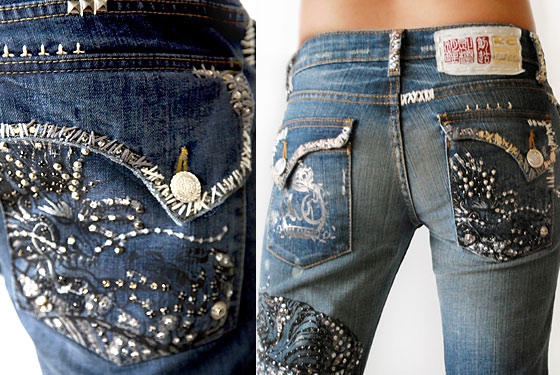
Remember Tom Ford and the $990 jeans? Okay, now remember how you felt when you read about them? If you're eyes bulged like ours did then prepare for them to fall right out of your head. New luxury brand Key Closet just made Tom Ford's jeans yesterday's news.
A growing luxury brand, Key Closet has attracted such clients as Lady GaGa, Jamie Foxx, and Omarion. As part of their most recent collection, they have created a pair of hand-made, one-of-a-kind jeans that are covered in 1309 stones, including real diamonds. The jeans retail at a whopping £7000 ($10,000). Talk about thumbing your nose at the economy.
Key Closet can be purchased online or in key independent stores.
July 16, 2009
July 15, 2009
July 14, 2009
Bastille Day in Brooklyn
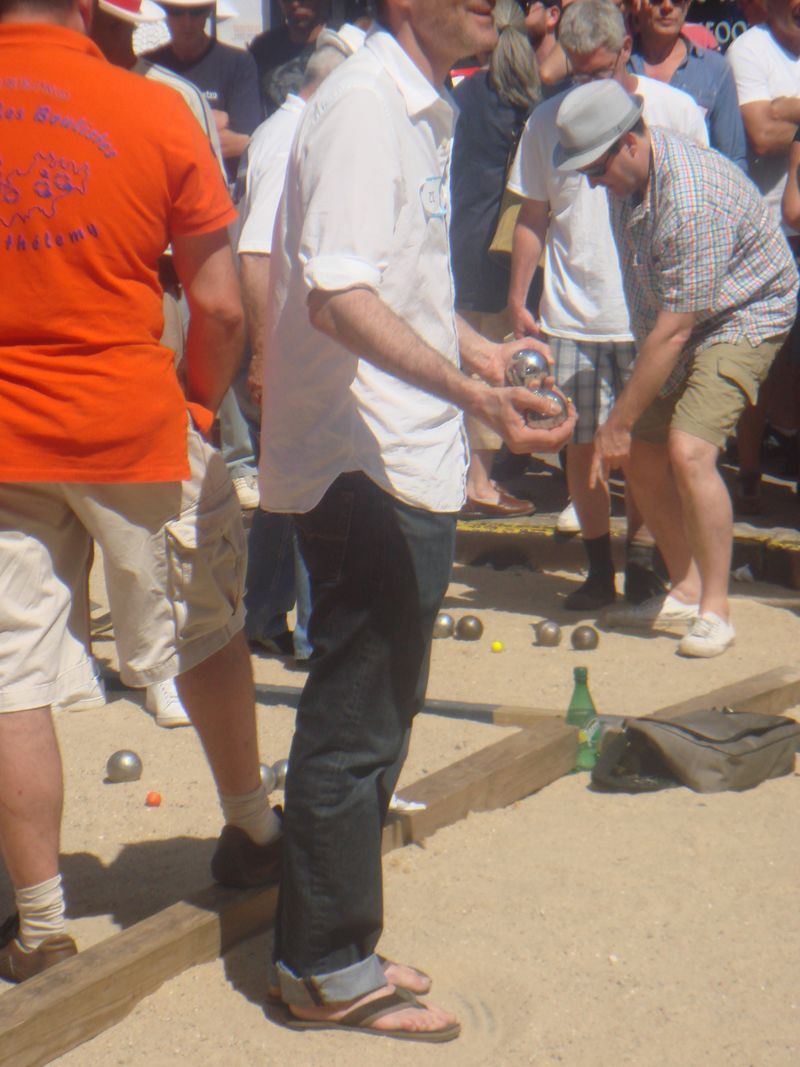
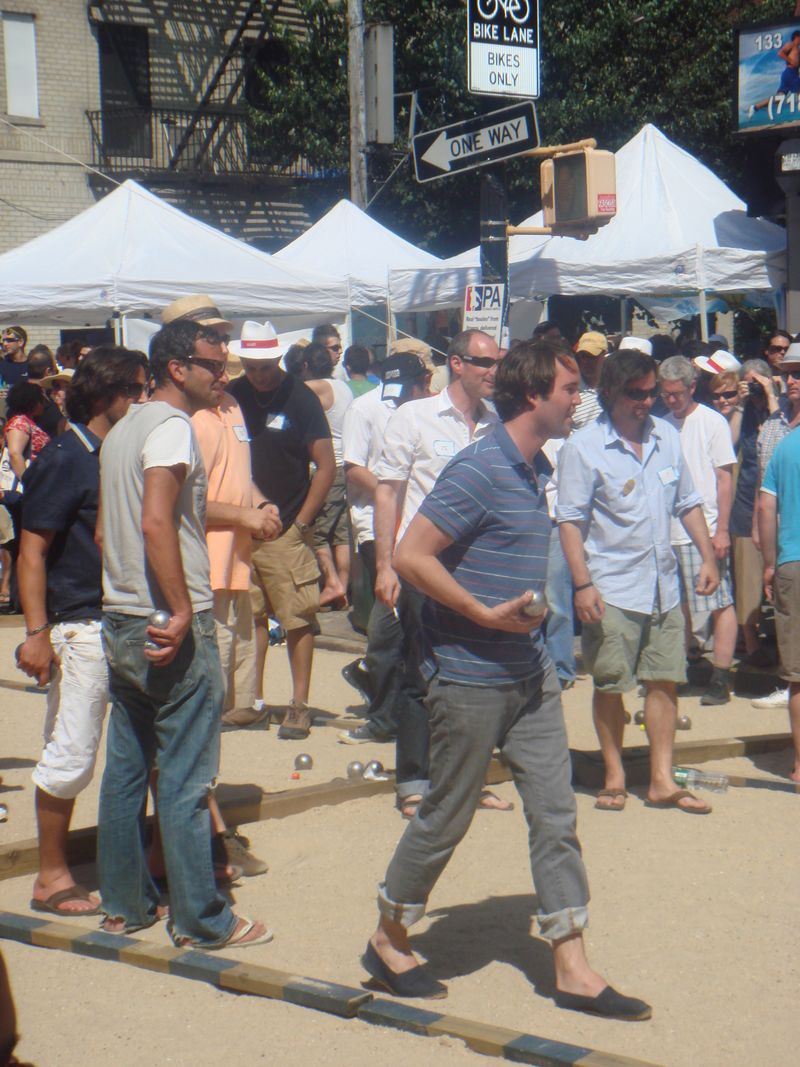
Revelers came out in full force for Brooklyn's own Bastille Day celebration on Smith Street. The event started at 12p and ended at 10p with event-goers enjoying a festival that celebrated the French equivalent of the 4th of July. For several blocks, Smith Street was miraculously transformed into a sandbox with multiple petanque courts set up for a tournament that included over 80 participants. On a small section that wasn't covered with sand, a skateboarding competition was held featuring some high-flying, fearless teenagers. Overall, it was a day filled with great music, great food and great denim-trends.
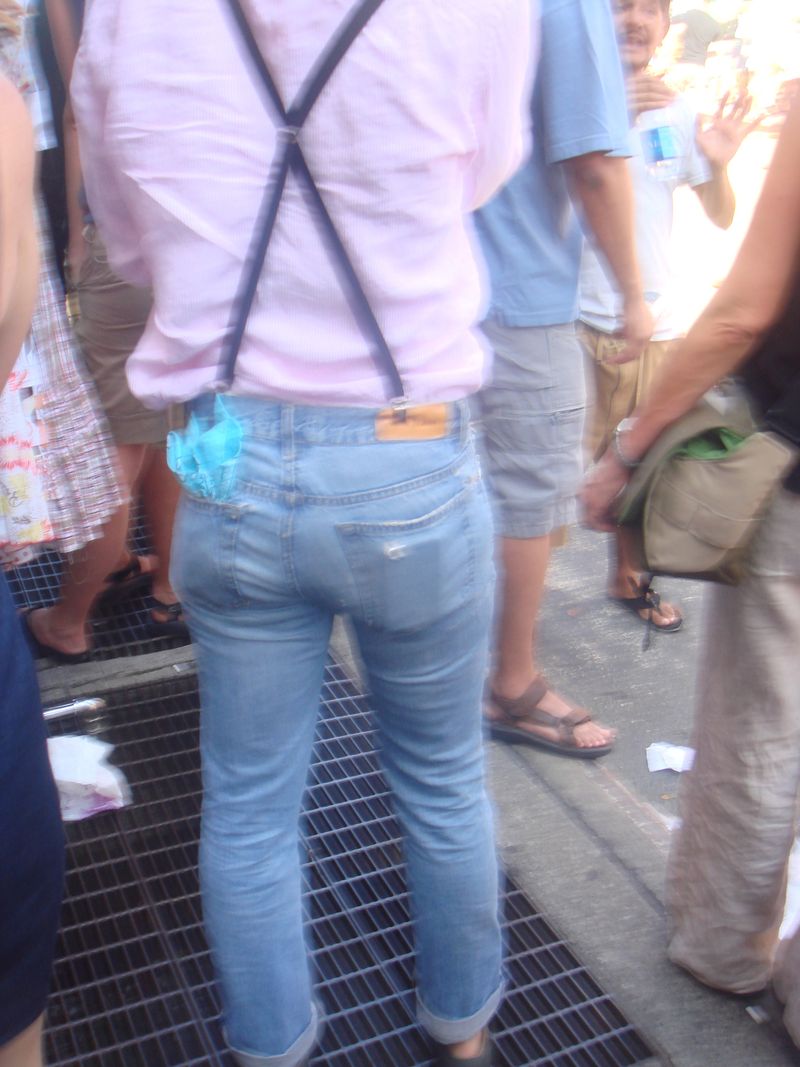
Ripped/torn jeans and cuffing was to be expected but was made extra edgy in extreme widths. Knee length cutoffs were prevalent on men and women as well as denim onesies and dresses. Suspenders added a uniquely euro-flavor and colored denim made an appearance.

Recent Comments